Articles

After onboarding hundreds of thousands of digital signage devices across thousands of networks, one thing is consistently true: the hardware is rarely the problem. And replacing it is almost always the most expensive decision an operator can make.
What digital signage remote onboarding actually means at scale
Digital signage remote onboarding isn't just device enrollment. It's taking over an existing fleet — wherever the devices are, whatever they're running — and getting the network stable without touching a single screen on-site.
That means no truck rolls. No factory resets. No multi-year migration programs. Just a remote connection to your existing devices and a single API layer that brings everything under control.
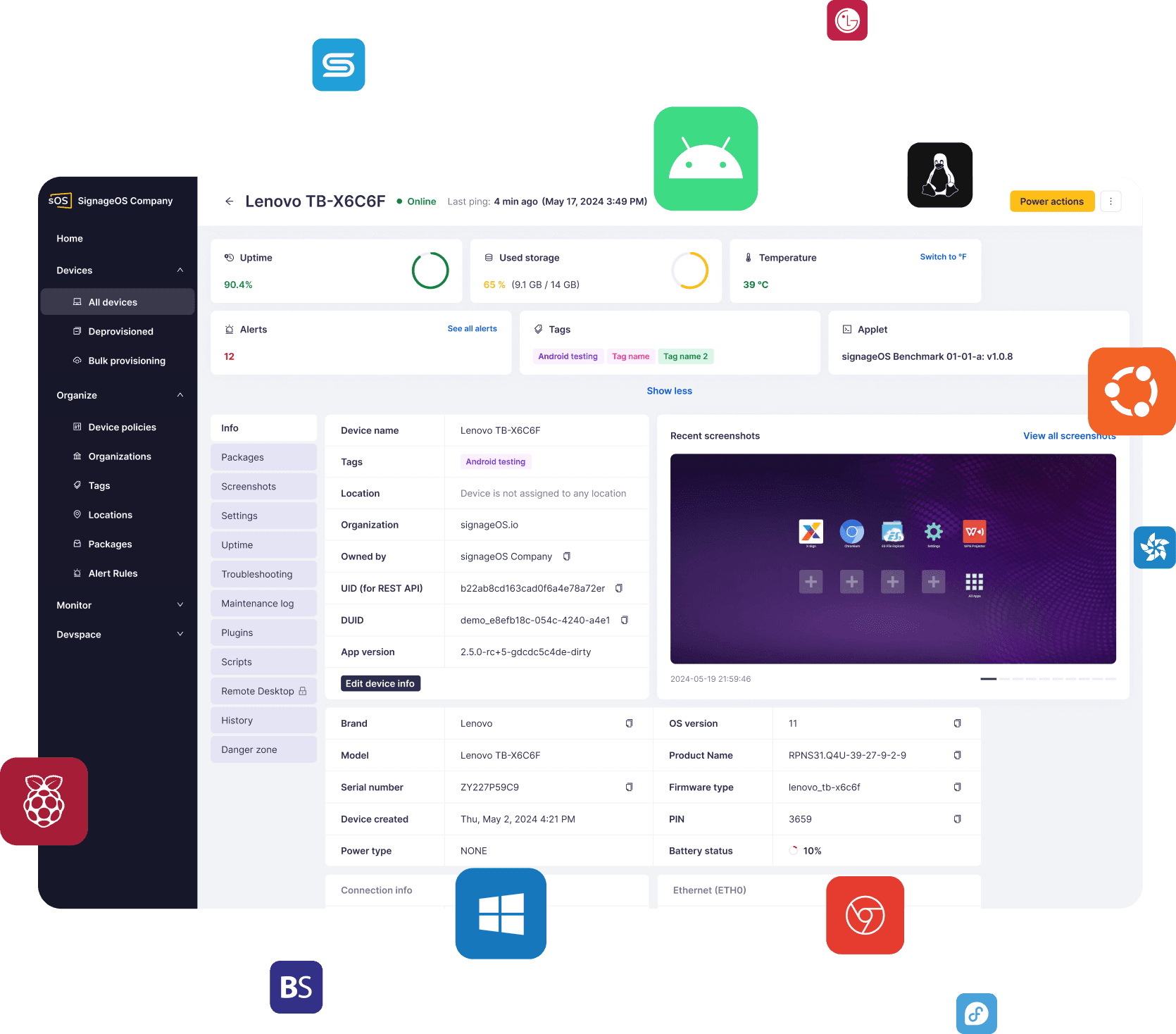
We onboard tens of thousands of devices every month. Proprietary Linux players. Obscure SoC platforms. Custom configurations that other platforms won't touch. Mixed fleets spanning multiple manufacturers, operating systems, and device generations. Whatever you're running, there's a path forward.
For operators in transition, that capability changes everything. The question stops being "what do we need to replace?" and starts being "how quickly can we get stable?"
The reality of most digital signage networks
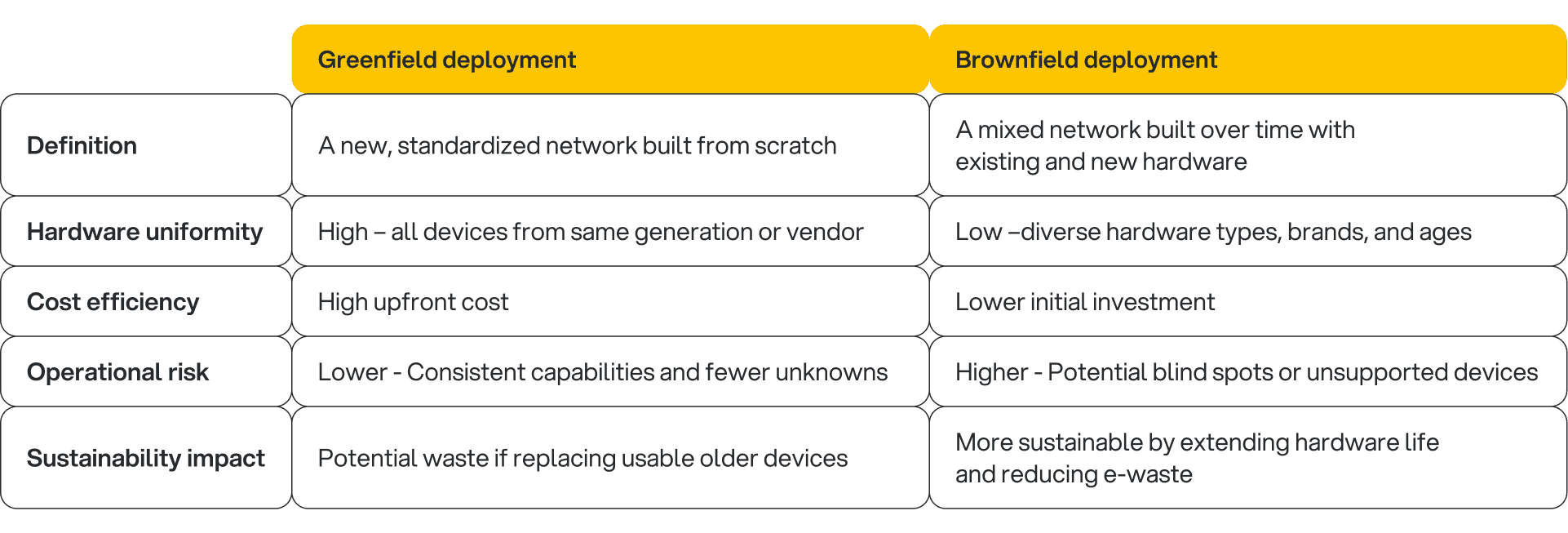
Most signage networks aren't built from scratch. They evolve over time — a deployment here, an upgrade there — until the fleet is a blend of older and newer devices from different manufacturers, with varying levels of functionality. In digital signage, brownfield deployments are the norm, not the exception.
Most networks evolve incrementally over time, resulting in a blend of older and newer devices from different manufacturers. Managing mixed hardware environments at this scale requires infrastructure built specifically for the complexity of digital signage, not general-purpose IT tools.
Greenfield deployments are networks built from the ground up with standardized, up-to-date hardware, and they are the exception. They offer simplicity and consistency, but they come with high upfront costs and the assumption that everything will stay standardized over time. In practice, it never does.
Brownfield networks are more complex to manage, but they represent a significant capital investment that operators shouldn't have to write off prematurely. The right infrastructure makes them just as manageable as a greenfield deployment. In fact, with the right infrastructure, the operational discipline required by a mixed fleet pays dividends at scale.
The capex case for keeping your existing hardware
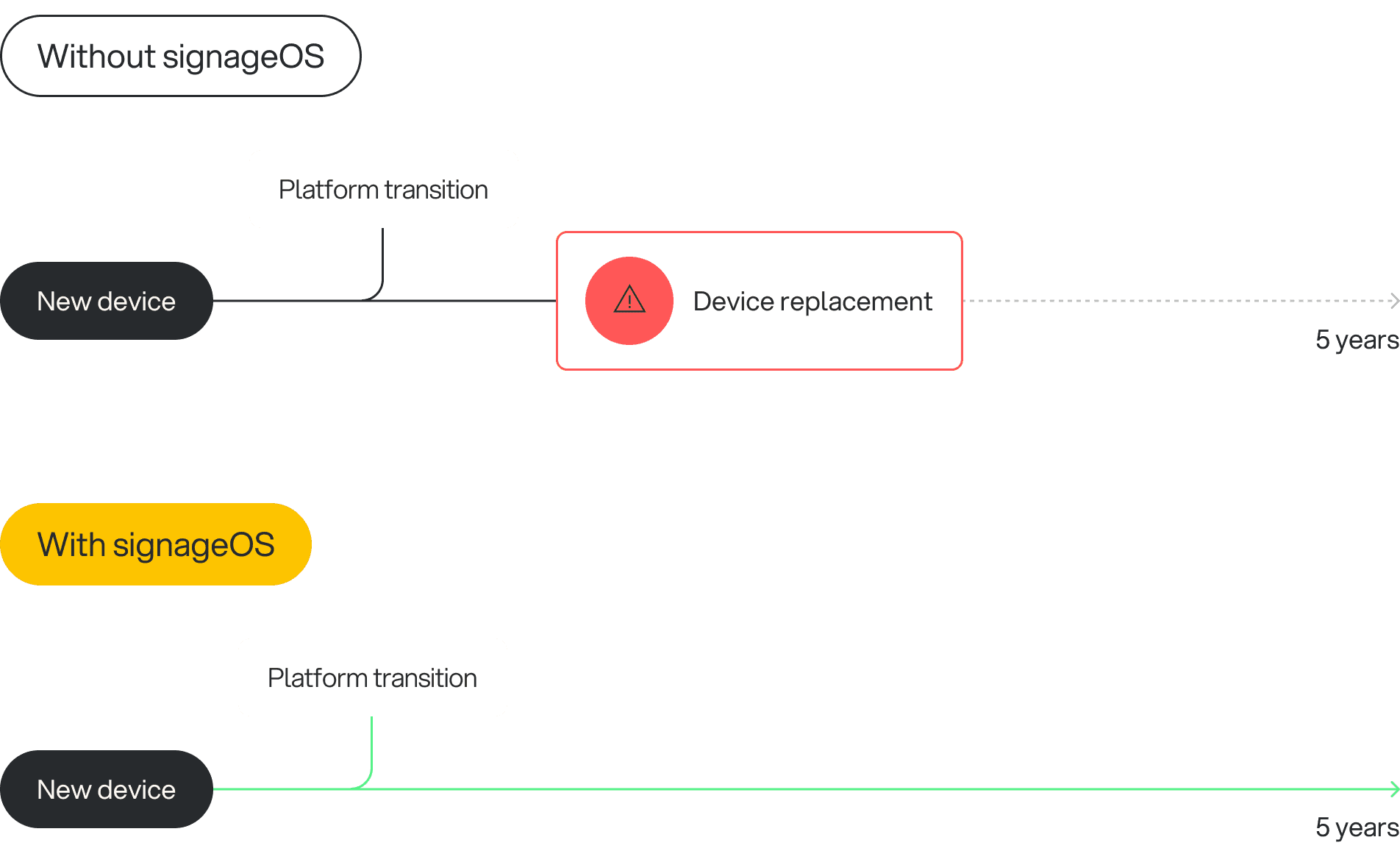
A commercial display or media player is a capital expenditure with a five to ten year life. Platform transitions and vendor collapses often pressure operators into replacing hardware prematurely. Replacing it early means writing off an asset that still works. At thousands of locations, that write-off compounds fast.
The real cost of a platform transition isn't the software. It's the hardware replacement, the truck rolls, the installation overhead, and the operational disruption across every location in the fleet. With signageOS onboarding, you don't have to replace any of it. Your existing devices — however old, however mixed, however unusual — can be onboarded remotely and kept running. The investment you've already made keeps compounding instead of getting written off. Operators who take this approach save millions, restore full network visibility within days, and avoid the operational disruption of a full hardware refresh.
How signageOS makes it possible
signageOS abstracts hardware differences so every device — regardless of manufacturer, OS, or age — connects through a single API. That means a Samsung Tizen display from five years ago and a newly deployed LG webOS panel appear in the same interface, managed with the same tools, monitored with the same real-time visibility.
CloudControl gives operators a single pane of glass across the entire fleet: device health, screenshot history, automated alerts, remote troubleshooting, and firmware management — all without on-site intervention. When a device goes offline at 6am in an unstaffed location, the system catches it and responds before anyone files a support ticket.
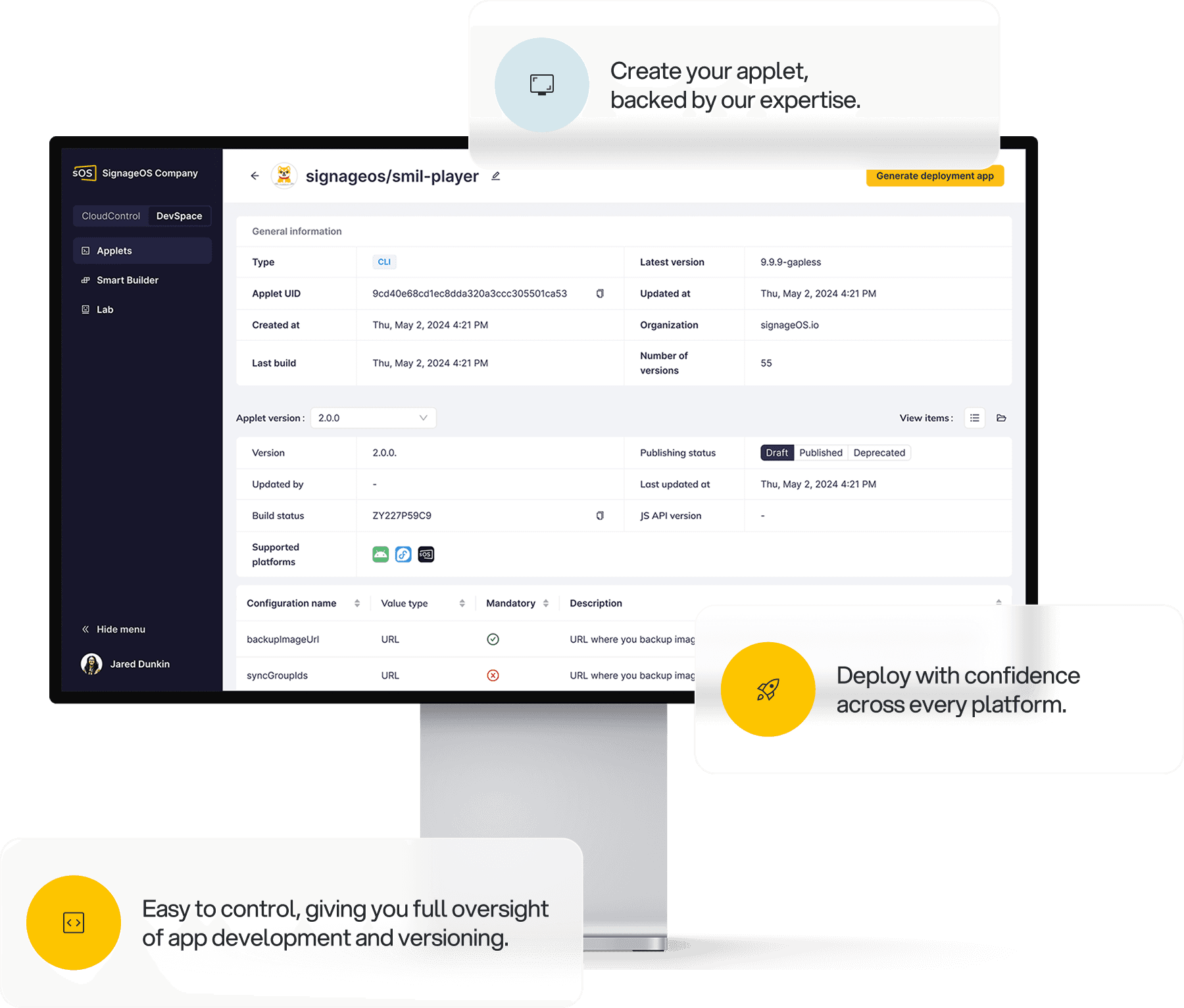
DevSpace ensures that applications built for one hardware platform run natively across every other platform in the fleet. Write once, deploy anywhere: across 50+ hardware platforms, including the proprietary Linux players and obscure SoC platforms that most platforms refuse to support.
It's how Cineplex Digital Media unified its FLEX CMS across a mixed SoC and Linux fleet without rebuilding for every device.
The result: a brownfield fleet that performs like a greenfield deployment, without the capital expenditure of replacing hardware that still has years of useful life left.
Choose on merit: leave compatibility to us.

The ESG (environmental, social, and governance) angle
Extending device lifespans is good for the bottom line and good for the environment. Replacing functional hardware prematurely generates e-waste and conflicts with the sustainability commitments that enterprise operators increasingly carry. Keeping existing devices in service longer reduces environmental impact and aligns with ESG goals without requiring any trade-off in operational performance.
For operators with formal sustainability targets, the decision to stay brownfield isn't just a cost decision. It's a values decision.
Next-gen signage doesn't mean starting over
The operators who navigate platform transitions best aren't the ones who replaced everything. They're the ones who recognized that the hardware was never the problem and found an infrastructure layer that could work with what they already had.
Whatever you're running — however old, however mixed, however unusual — we've probably seen it. And we can support it.
FAQ
How do I onboard existing digital signage devices to a new platform without replacing them?
signageOS onboards existing devices remotely — including SoC displays, proprietary Linux players, and mixed hardware fleets — without factory resets or truck rolls. Devices connect to the signageOS API, giving operators full visibility and control through CloudControl without touching a single screen on-site.
How do I manage a mixed hardware digital signage network from one platform?
signageOS connects every device — regardless of manufacturer, OS, or generation — through a single API and interface. Samsung, LG, BrightSign, proprietary Linux players, and custom SoC platforms all appear in one dashboard with consistent monitoring, remote management, and screenshot verification across the entire fleet.
What is a digital signage brownfield deployment?
A brownfield deployment is a signage network built incrementally over time, combining older and newer devices from different manufacturers. Most enterprise signage networks are brownfield by nature. A hardware-agnostic infrastructure layer like signageOS manages every device regardless of brand, OS, or age through a single interface.
Is it worth replacing digital signage hardware during a platform transition?
In most cases, no. Commercial displays and media players have a 5-10 year capital life. signageOS onboards existing devices remotely, preserving the hardware investment and avoiding premature replacement costs. Operators who kept their existing fleet rather than replacing it saved millions during platform transitions.
How do I extend the lifespan of my digital signage hardware?
Decouple the device from the software running on it. With signageOS as the infrastructure layer, software can be updated or replaced without touching the hardware. Devices serve their full depreciation life regardless of software changes above them, reducing premature replacement costs and e-waste.