Read Time:
5 mins
Articles
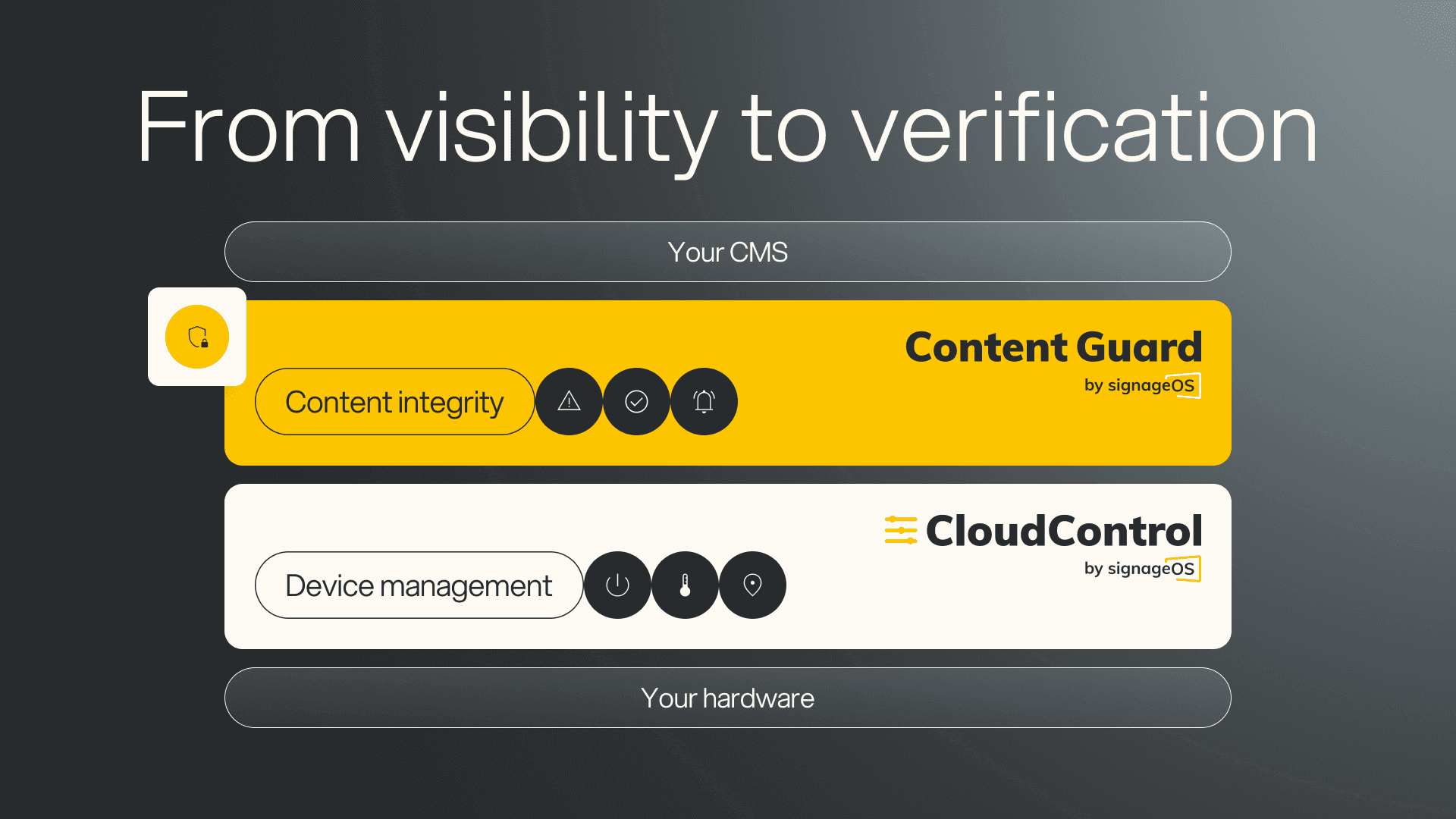
Digital signage content verification is becoming essential because a device can be fully operational — and still be wrong. That gap is the blind spot of traditional digital signage monitoring, and the reason signageOS built Content Guard.
Most monitoring tools were built to track device health: connectivity, uptime, system status. But digital signage isn’t experienced as a system. It’s experienced as a screen.
Modern screens are revenue drivers, brand touchpoints, and, in many cases, regulated communication channels. In that environment, knowing that a device is online is no longer enough.
What digital signage device management measures — and what it misses
CloudControl by signageOS is a digital signage device management tool designed to track infrastructure health. It provides visibility into uptime, connectivity, system performance, and player status across distributed networks.
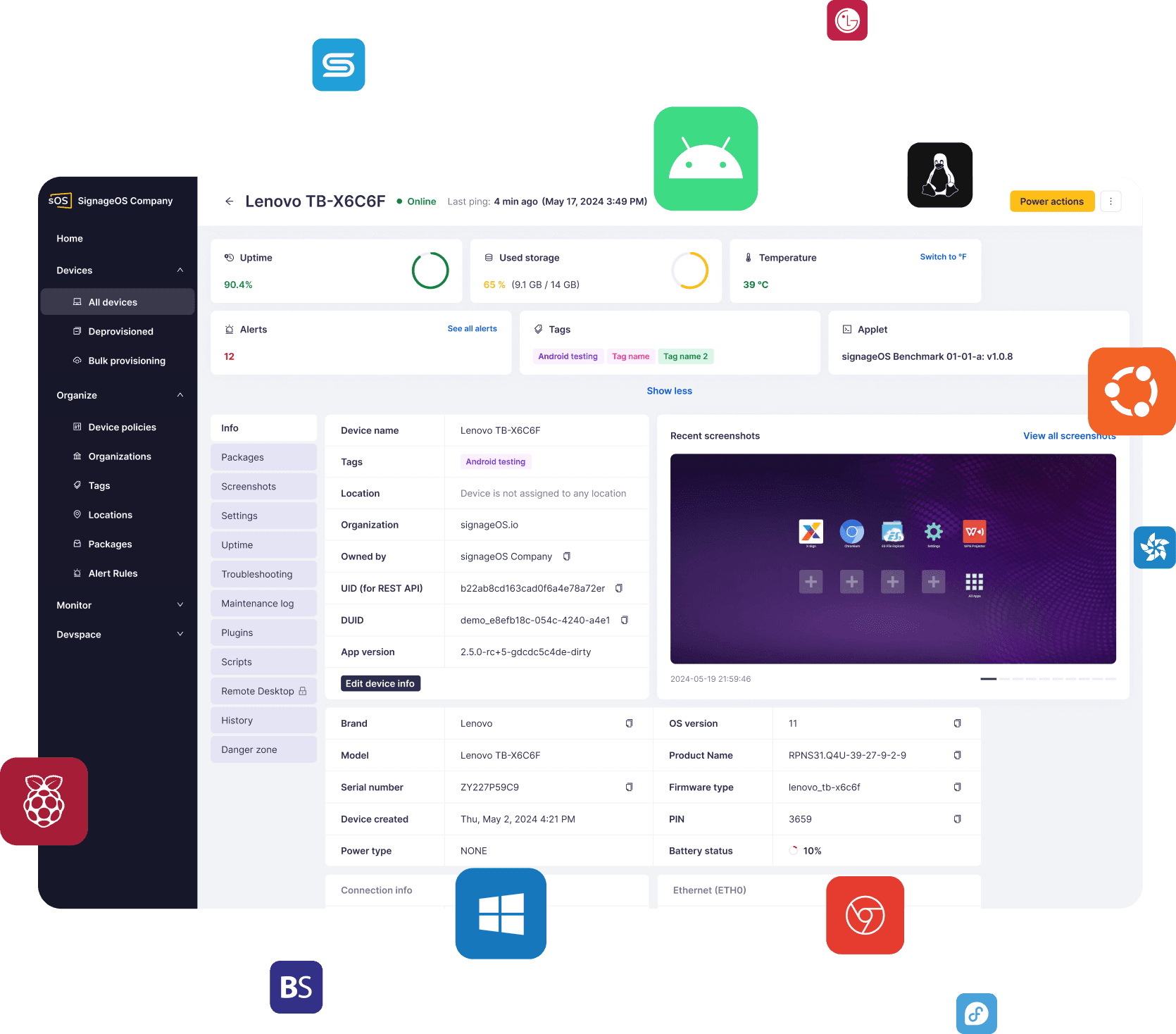
CloudControl
Real-time device management and monitoring for 50+ hardware platforms in a single unified tool. The single pane of glass you’ve been waiting for!
As a cloud-based digital signage platform, CloudControl’s visibility extends to screenshot dashboards, giving teams a way to visually inspect screens remotely. But screenshots alone don’t solve the problem. They still rely on human interpretation.
Monitoring answers a technical question: Is the device working?
It does not answer the operational one: Is the screen correct?
That distinction matters.
In real-world deployments, visual failures happen even when systems are fully “healthy.” A screen can go blank, display a system menu, render a broken layout, or be missing an applet — all while “online.”
From a digital signage infrastructure perspective, everything looks fine. But from a customer’s perspective, it’s a visible failure.
In retail and QSR environments, missing applets or blank screens can directly affect revenue. In brand-driven environments, malicious content or a distorted layout erode customer trust. In regulated industries, incorrect or missing information can introduce compliance risk.
The limits of manually reviewing screenshots at scale
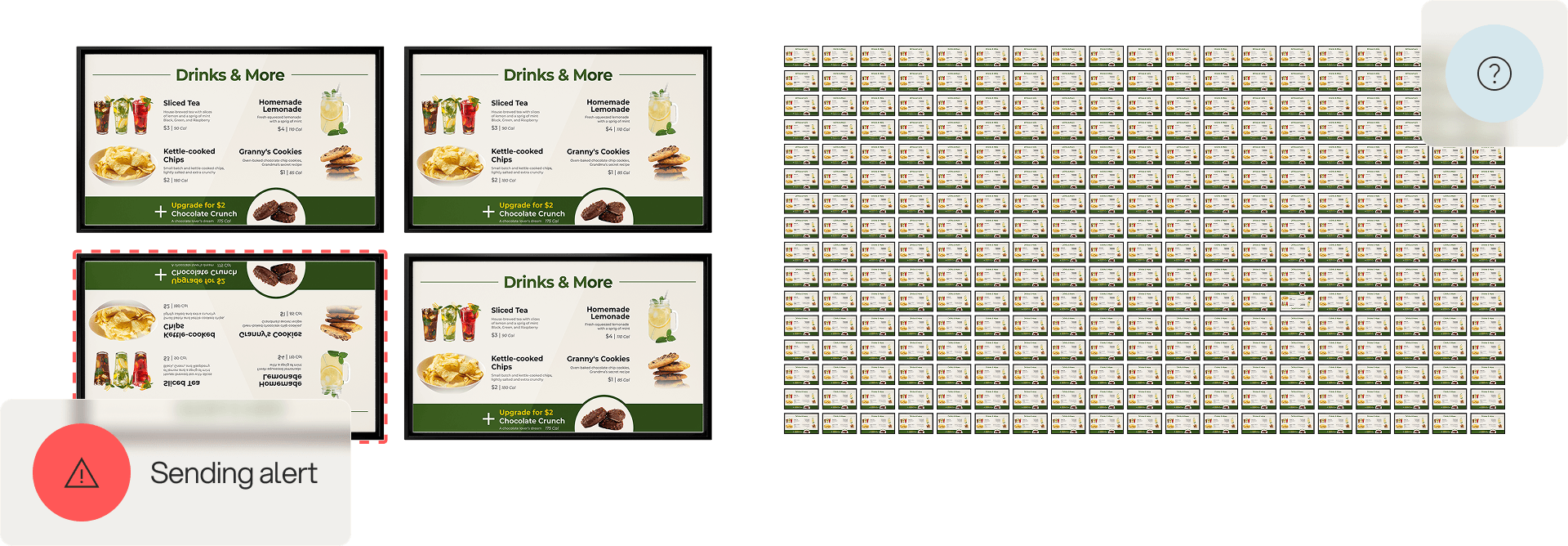
To bridge this gap, many teams rely on manual screenshot review. At a small scale, this approach works. A team can periodically scan screens, catch obvious issues, and respond accordingly. But modern digital signage fleet management rarely operates at small scale.
As networks grow into hundreds or thousands of endpoints, manual review becomes a bottleneck. Teams are asked to process a constant stream of visual data, looking for subtle inconsistencies across a multi-platform digital signage environment.
The result is predictable: fatigue, inconsistency, and delayed detection. Human review does not scale with the complexity of today’s enterprise digital signage platforms.
Device management vs. content validation in digital signage
At the core of this challenge is a simple but critical distinction.
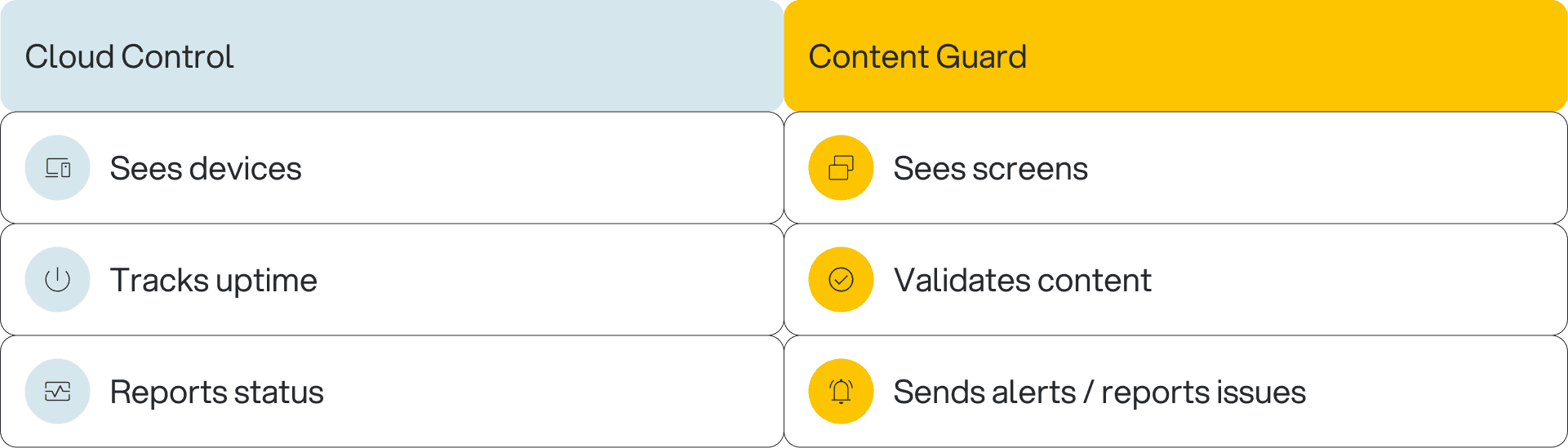
Monitoring observes system state. Content validation interprets visual state. Or more simply: Monitoring sees devices. Content validation sees screens. This is the next level in modern digital signage system management.
Monitoring alone can’t support the next phase of digital signage. The industry is already moving beyond uptime toward content integrity as the new standard.
Meet Content Guard, the content validation layer for digital signage
Content Guard extends CloudControl with real-time content validation, adding a new layer of visibility to your digital signage network monitoring.
Instead of relying on manual checks, Content Guard analyzes what is actually displayed on screen — continuously and at scale.
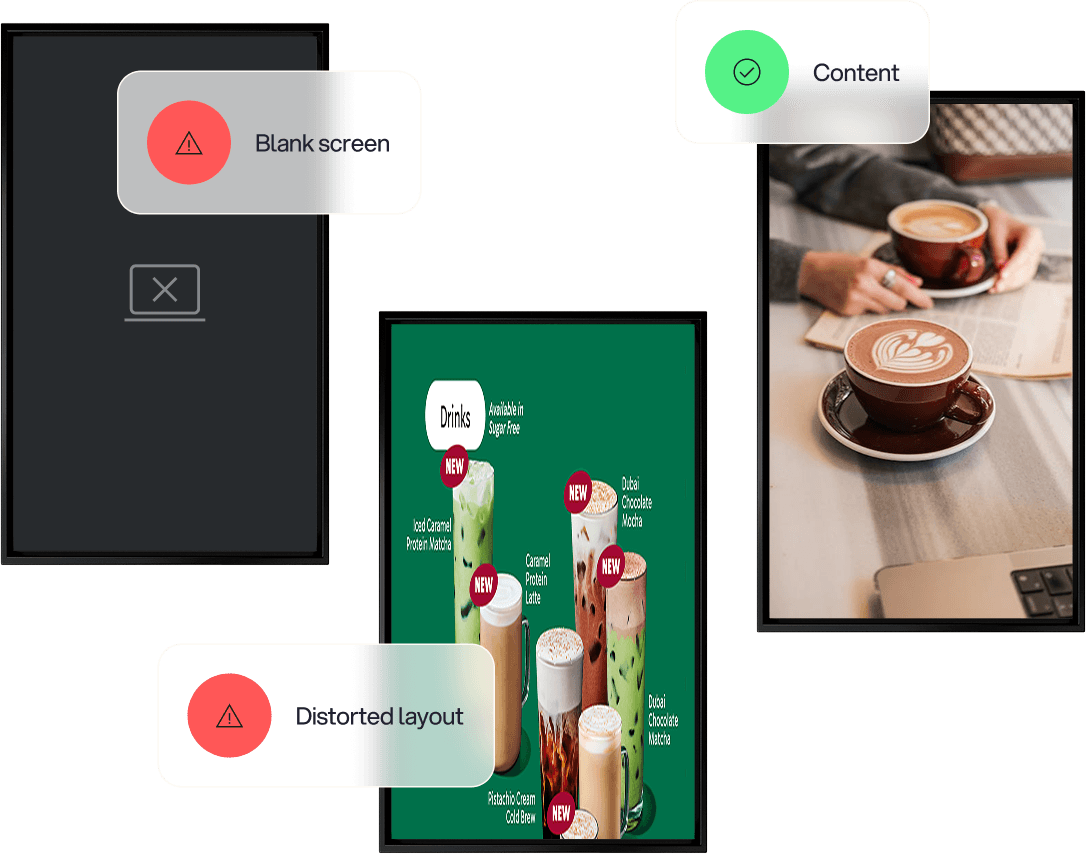
It uses a combination of image-based detection and optional AI digital signage capabilities, including prompt-based validation and context-aware classification, to interpret visual output across the network. This allows teams to automatically identify issues such as blank screens, system menus, malicious content, and missing applets.
Content Guard
Validates content and triggers alerts to keep every device performing as expected.
Because Content Guard operates within a hardware-agnostic digital signage environment, it works across devices, operating systems, and CMS platforms without requiring changes to your existing hardware or CMS setup.
“Content Guard’s role is straightforward but critical. CloudControl protects the infrastructure, and Content Guard protects the experience. Together, they form a more complete digital signage operations platform.”

AI capabilities: from visual detection to context awareness
Content Guard can be used with or without AI. But for teams managing complex or dynamic content, AI adds a powerful layer of flexibility.
Instead of relying only on visual matching, AI enables a deeper level of understanding, interpreting not just what appears on screen, but whether it makes sense in context. Teams can define what should (or shouldn’t) be displayed using natural language prompts, making validation more adaptable across different campaigns, formats, and environments.
This approach also makes it possible to scale validation across large, content-rich networks without increasing operational overhead. With tools like AI Prompt Helper, Content Guard can automatically generate descriptions of on-screen content, simplifying setup and improving accuracy over time.
The result is a more intelligent form of content verification that ensures every screen aligns with expectations.
From device management to content validation
A green dashboard does not mean a flawless network. Device management and monitoring remains essential. It provides the foundation for remote screen management, ensuring that devices are online and systems are functioning. But it is only one part of the equation.
To operate a truly scalable digital signage platform, organizations need both:
Device management
Content validation
This is where Content Guard fits.
By adding real-time content validation to CloudControl, teams gain confidence that every screen is not just online, but correct.
Want to see how Content Guard works in practice? Book a demo.
Move beyond device management and toward intelligent content validation.
Discover how Content Guard is redefining modern digital signage infrastructure.
FAQ
What is digital signage device management?
Digital signage device management tracks system health, including uptime, connectivity, and device performance across a network.
What is content validation in digital signage?
Content validation ensures that what is displayed on screen is correct, complete, and aligned with expectations. This tool checks for blank screens, malicious content, and more.
What is Content Guard?
Content Guard is a content validation tool within CloudControl that analyzes screenshots to detect visual issues and ensure content integrity.
Why is monitoring not enough for a modern digital signage deployment?
Monitoring reports system status but does not verify visual output. A device can be online while displaying blank, incorrect or broken content.
What does modern digital signage management require?
A combination of digital signage device management software and a real-time content validation tool to ensure both system health and content accuracy.
Read more about digital signage evolution in our previous article, From device uptime to content integrity.