Product Updates

We’ve rolled out several enhancements to make your experience more secure, efficient, and informative. This release includes updates to CoreApps for Tizen, webOS, and Brightsign, improved clarity in Alert Rules, the introduction of a Viewer-Only Mode in Box, device Customization Features and a reminder to test the New Device Gateway Endpoint. Read on to see what’s new and how these updates benefit you.
For more updates on the latest features, please check our Changelogs.
CoreApps Release
The latest CoreApps release provides expanded support for Tizen, webOS, and Brightsign devices, enabling advanced device management.
On-device ContentGuard pre-processing is now available, allowing content to be securely handled before deployment. Scripts, Plugins, and Runners are fully supported, offering greater flexibility in automation and workflow customization.
In addition, CoreApps introduces a new Policy Enforcement power action and telemetry cache cleanup, helping maintain optimal device performance. The screenshotUpload() method has been enhanced to allow headers to be set for the upload request, providing greater control over data integration.
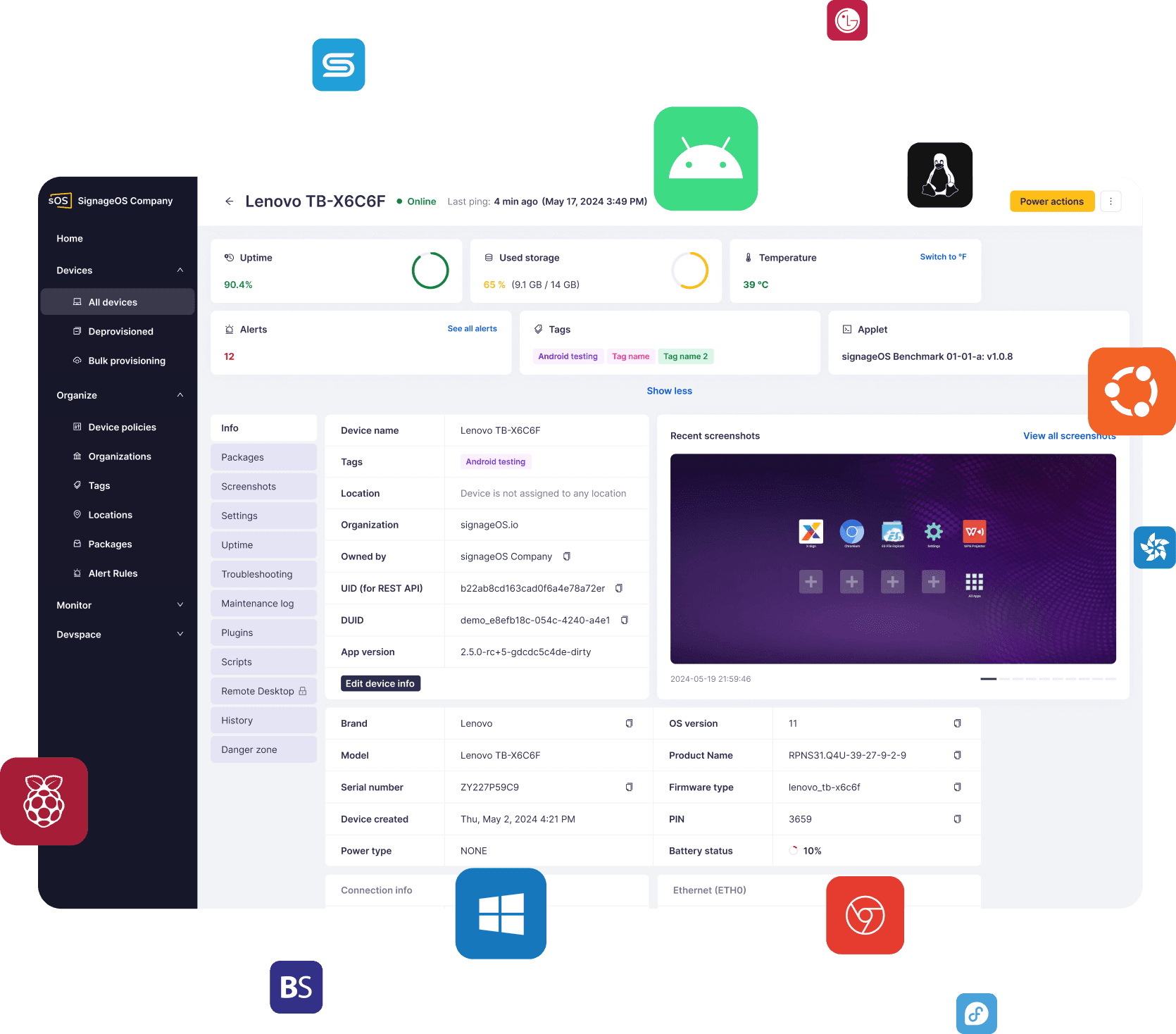
Finally, CoreApps now offers out-of-the-box CPU and memory monitoring, giving administrators clear visibility into device performance and resource usage.
Alert Rule Update
The Alert Rule detail page has been updated to improve clarity and utility. Previously, the history tab combined both rule modifications and alert events, which could make it difficult to track critical incidents. To address this, we have introduced a new dedicated tab named “Triggered Alerts” that exclusively tracks the lifecycle of alerts generated by a specific rule.
The existing history tab remains, continuing to display audit logs of rule modifications, including the change timestamp, details, and user responsible. The new tab separates triggered alerts from rule edits, providing a more focused view of each alert’s lifecycle. This update makes it easier to monitor and respond to alerts effectively while maintaining full visibility into rule changes.
View-Only Mode for Box
We are introducing View-Only Mode for Box, a new mode designed for users who need full visibility into documents and folders without the ability to modify content. In this mode, users can access all files and folders they are granted permission to view, including the folder structure and document contents. However, they are placed in a read-only state and cannot modify any content.
This mode enhances security by reducing the risk of accidental data leaks or unauthorized changes. It also supports compliance requirements by allowing access to necessary information while maintaining control over sensitive content. By clearly defining user roles, View-Only Mode ensures that those who only need to reference information cannot inadvertently alter the project state. In short, users see everything in Box but can take no actions, offering a secure, read-only experience.
Plugins & Runners
The signageOS platform now provides new ways to extend device functionality and customize behavior: Plugins and Runners. These features help build, customize, and maintain digital signage on a large scale.
Once installed, a Plugin behaves like a native CoreApp feature and can be managed through Policies. It runs automatically and periodically to keep the configuration consistent. For example, a Plugin can enforce a display’s color setting, control connected display configuration with RS232 commands, and appear in Box as a configurable option like any built-in setting.
Runners handle continuous operations. They run persistently on the device, monitored by CoreApp for health and uptime. A Runner is useful for complex, always-on logic such as managing enterprise Wi-Fi connections with certificate authentication. It maintains the connection, reports status to Box, and restarts if needed.
Reminder: Update Your Network Settings for New Regional Endpoints
Action Required: If you haven't yet, please confirm that your firewall/network settings have been updated to allowlist the new regional endpoints, in addition to the global endpoints that remain mandatory.
Need help?
Our support team is ready to assist: